Viet Nam International Financial Center in Da Nang: Small but Green and Smart
14/01/2026 379 Press Release
VOV.VN – According to Assoc. Prof. Dr. Dang Tung Lam, the most appropriate development path for the Viet Nam International Financial Center in Da Nang City (VIFC-DN) is to become a small but smart financial center, with technology, innovation, and sustainable development as its core foundations.
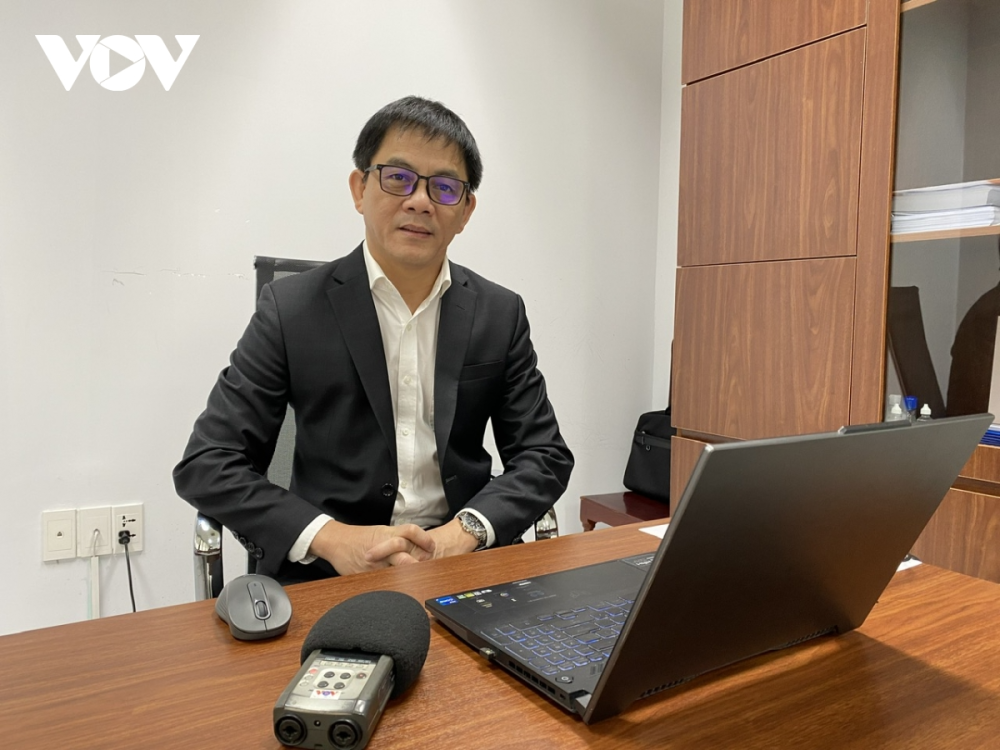
Reporter: In a regional context where many financial centers with strong reputations and advanced levels of development have already been established, in your opinion, which core competitive advantages should Da Nang identify and focus on to position itself as a destination of the Viet Nam International Financial Center, thereby enhancing its attractiveness to international investors and financial institutions?
Assoc. Prof. Dr. Dang Tung Lam:
In my view, Da Nang should not aim to compete head-on with long-established financial centers such as Singapore, Hong Kong, or Ho Chi Minh City. Da Nang’s advantages lie elsewhere—and they are quite clear.
First, science, technology, innovation, and digital transformation should not merely play a supporting role, but must be regarded as core pillars for Da Nang to position itself on the international financial map.
Second, instead of pursuing scale, Da Nang should adopt a leapfrogging strategy by focusing on new financial models. This approach would help expand access to international capital, particularly for small and medium-scale projects.
Third, technology can only be effective when accompanied by a transparent, flexible, and predictable institutional framework. International investors place great importance on simplified procedures, clear legal frameworks, and effective dispute resolution mechanisms. Therefore, linking the international financial center with the Free Trade Zone and a special legal regime will constitute a critical advantage.
In addition, I believe green finance should be regarded as a distinct pillar of Da Nang. If the city can early establish standards, appraisal mechanisms, and technological applications to ensure transparency, Da Nang can certainly emerge as a new regional destination for green finance.
In summary, the most suitable path for Da Nang is to become a small but smart financial center, grounded in technology, innovation, and sustainable development.
Reporter: Under the strategic orientation for developing the International Financial Center, Da Nang has selected several specialized priority areas such as green finance and trade finance for innovative enterprises and small and medium-sized enterprises (SMEs), while also piloting new financial models—including digital assets, digital currencies, and digital payments—under a controlled sandbox framework. In your view, what opportunities does this selective and in-depth approach open up?
Assoc. Prof. Dr. Dang Tung Lam: Da Nang’s selection of specialized areas such as green finance, trade finance for SMEs, along with sandbox mechanisms for digital assets and digital payments, represents a distinctive and strategic direction.
First is green finance, which is currently a major global trend in the financial system. Demand for capital to support renewable energy, sustainable infrastructure, and climate adaptation in Viet Nam and the region is substantial. With its orientation toward becoming a green city, Da Nang has favorable conditions to attract international green capital flows.
Second is trade finance for SMEs and financing for innovative enterprises. These businesses account for a large proportion of the economy, yet face the greatest difficulties in accessing capital. If Da Nang can develop a trade finance ecosystem linked to the Free Trade Zone—encompassing supply chain finance, export-import credit, and digital financial platforms—the city can fill the existing trade finance gap for SMEs while avoiding direct competition with financial centers that primarily serve large corporations and traditional institutions.
Third is the sandbox for digital assets, asset tokenization, and digital payments. If implemented effectively, Da Nang could become a controlled testing ground for new financial models in the region, enabling experimentation with more transparent methods of capital mobilization and transactions, particularly for green projects, infrastructure, and cross-border trade.
Reporter: However, what key policy challenges does this approach pose for the development and operation of the Viet Nam International Financial Center in Da Nang?
Assoc. Prof. Dr. Dang Tung Lam: The challenges are also quite evident. The biggest difficulty lies in the fact that the domestic legal framework is still being refined. If institutions are not sufficiently clear and transparent, risks such as greenwashing, fraud, or money laundering could undermine investor confidence.
There are also challenges related to technological infrastructure, cybersecurity, and high-quality human resources—particularly professionals who possess expertise in both finance and technology.
Certainly, this path is not easy. However, with a special institutional framework, appropriate infrastructure, and a well-designed human resource strategy, Da Nang can absolutely become a green, innovative, and digital financial center of the region.
Reporter: In the orientation toward building the Viet Nam International Financial Center in Da Nang City (VIFC-DN), Da Nang has identified innovation as a central pillar, with priority areas including green finance, the carbon market, fintech, and digital assets. To realize this vision, which key market mechanisms should Da Nang design and operate to attract capital flows, foster innovation, and ensure transparency and safety within the financial system?
Assoc. Prof. Dr. Dang Tung Lam: In my opinion, to turn vision into reality, the most important requirement is for Da Nang to establish concrete market mechanisms, rather than stopping at strategic orientations.
First, green finance must be treated as a core pillar. International experience shows that when governments actively participate in the market—for example, by issuing green bonds for infrastructure projects—they create benchmarks that attract private investors and international ESG funds. In parallel, Da Nang needs to establish transparent appraisal and certification mechanisms for green projects, ensuring that investors are confident their capital genuinely supports sustainable development.
Second is the carbon market. This is the gateway for Da Nang to assert its role as a regional green financial hub. To achieve this, the city must prioritize transparent systems for emissions measurement, reporting, and verification. Digital technologies—particularly blockchain—can support traceability and enhance market trust.
Third is digital assets and fintech, which form the differentiating component. Da Nang should avoid uncontrolled expansion, and instead adopt carefully designed pilot mechanisms that allow experimentation with asset tokenization, digital payments, and blockchain applications in finance and trade. Crucially, there must be a clear legal framework, defined pilot scope, and robust supervision to both encourage innovation and manage risks.
In addition, the sandbox should be regarded as a foundational instrument. If well designed, it can nurture a dynamic fintech ecosystem, aligned with Da Nang’s leapfrogging development strategy.
Finally, for these market mechanisms to operate effectively, international-standard legal and governance frameworks are indispensable.
Reporter: Thank you very much, Assoc. Prof. Dr. Dang Tung Lam./.
Related news
-
Victory Securities explores Danang IFC
-
Da Nang IFC set to serve the country’s overall development
-
International Financial Centre in Da Nang: An “Open Gateway” for New Financial Models
-
Central hub calls for international investment in finance, hi-tech industries
-
Viet Nam International Financial Centre in Da Nang City: Building a Brand, Elevating Its Standing
-
Accelerating the Implementation of the International Financial Centres in Ho Chi Minh City and Da Nang