Proposing differentiated pathways for Viet Nam’s International Financial Centre in Da Nang
15/11/2025 257 Press Release
At the panel discussion on “Attracting Sustainable Financial Services to the Da Nang International Financial Centre” held on the afternoon of 6 November, experts proposed several distinctive strategic directions for Da Nang — from creating space for the development of non-deposit-taking lenders to strengthening the Fintech ecosystem.
Professor Xuan Thao Nguyen of the University of Washington (USA) observed that the future of a modern financial ecosystem no longer lies solely in the traditional banking model, but in the growth of non-deposit-taking lenders (NDTLs) — the force driving a wave of innovation in global finance.
 Professor Xuan Thao Nguyen from the University of Washington (USA) presents her remarks at the roundtable
For Da Nang, Professor Nguyen believes that, for the International Financial Centre (IFC) to evolve in a dynamic and innovative direction, the city must deliberately create “space” for NDTLs to develop strongly. While Ho Chi Minh City is pursuing a more standard financial-centre model, Da Nang can choose a different path — positioning itself as a destination for fintech, green finance, supply chain finance and new credit models.
To realise this vision, Professor Nguyen proposed that Da Nang develop a dedicated legal framework for NDTLs, separate from the regulations applied to traditional banks; design a flexible, tiered licensing regime based on scale and business model; streamline administrative procedures while ensuring transparency and predictability; and establish modern dispute-resolution mechanisms with specialised arbitral bodies and courts that recognise foreign judgments. At the same time, Da Nang should consider adopting outstanding incentive policies, such as tax exemptions and reductions in the initial stages, to attract international investors.
“No modern IFC relies solely on banks. NDTLs provide the space for innovation, support small and medium-sized enterprises, and promote sustainable growth. If Da Nang wants to create a distinct identity and compete internationally, NDTLs must be treated as a strategic foundation right from the outset,” Professor Xuan Thao Nguyen emphasised.
A “golden destination” for Fintech investors
Sharing his perspective on Da Nang’s potential to attract Fintech investors, Perapong Srivipapattana, Client Relationship Director of IFS Capital Group, assessed: “Da Nang has tremendous potential to become a regional Fintech hub, thanks to its developing technology ecosystem, young talent pool and strong government orientation towards digital transformation.”
 Mr. Perapong Srivipapattana, Client Relationship Director of IFS Capital Group, delivers a presentation on “How to Attract Investors to Fintech Companies Headquartered at the Da Nang IFC”
According to IFS research, Viet Nam’s Fintech market was valued at more than USD 15 billion in 2024. Within this landscape, Da Nang stands out in three areas: green finance, trade finance, and digital/innovation finance.
To make Da Nang a true “golden destination” for regional Fintech investors, Mr. Perapong proposed four strategic directions:
Strengthen the Fintech ecosystem and position Da Nang as Viet Nam’s smart and digital financial hub, connecting Central Viet Nam with ASEAN;
Improve the legal and administrative framework, shorten licensing procedures, and implement tax and investment incentives;
Enhance public–private partnerships (PPP), connecting with international financial institutions and development funds to invest in financial-technology infrastructure;
Develop an international promotion strategy through investment-promotion events in Singapore, Hong Kong, Seoul and China, targeting investors already active in Fintech across ASEAN.
Mr. Perapong Srivipapattana expressed confidence that, with strategic vision, open policies and a spirit of innovation, Da Nang can absolutely become a vibrant Fintech centre for Viet Nam and the wider region.
 Mr. David Otto, Founder and Chief Executive Officer of Martin Davis LLP, presents on “Developing a Legal Framework for Sustainable Finance and Fintech”
Building a modern legal framework for sustainable finance and Fintech
Further elaborating on the legal framework for the Viet Nam IFC, Mr. David Otto, Founder and CEO of Martin Davis LLP, stressed that establishing a comprehensive and flexible legal framework is a key factor in promoting sustainable finance and Fintech in the digital economy.
According to Mr. Otto, countries are facing a major opportunity to transform their financial systems towards greener and more inclusive models, but the challenge lies in balancing innovation with risk control. He therefore recommended that the legal framework be designed to encourage creativity while ensuring transparency, safety and investor confidence.
The founder of Martin Davis LLP also proposed enhancing cooperation between the public and private sectors, as well as between regulators and Fintech firms, to create a flexible policy-testing environment (sandbox).
“This will not only help governments keep pace with emerging technology trends, but also channel capital into green finance and innovation,” Mr. David Otto noted.
 Speakers engage in discussion and exchange of views
Secured transactions law – a cornerstone for modern trade finance
Meanwhile, Professor Xuan Thao Nguyen emphasised that secured transactions law is the key legal foundation for all funding activities — from trade finance and warehouse financing to agricultural finance and supply chain finance.
She explained that secured transactions law plays a central role in governing transactions involving collateral, particularly in receivables purchase agreements or financing structures based on circulating inventory in business operations.
Professor Nguyen also pointed out that, in Viet Nam today, most funding activities are still primarily governed by banking law or contract law, whereas in many other countries, secured transactions law is the main legal framework for this area. Consistent application of secured transactions law would help protect the rights and interests of businesses, facilitate access to capital and support expansion of business activities.
She further stressed the importance of connecting secured transactions law with bankruptcy law. In cases where a seller or customer becomes insolvent, clear rules on priority over assets will help mitigate risks, ensure fairness among creditors and contribute to a healthier, more transparent financial environment.
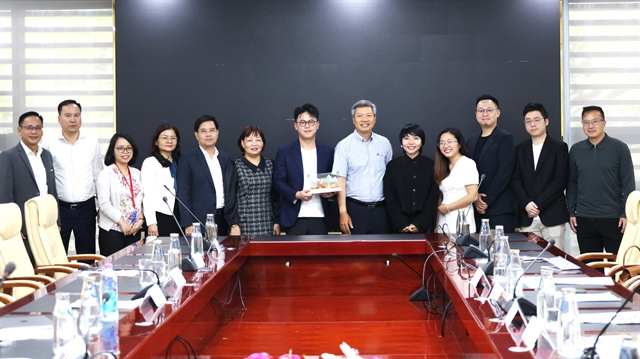
 Standing Vice Chairman of the Da Nang People’s Committee Ho Ky Minh poses for a commemorative photo with delegates and speakers
Related news
-
Victory Securities explores Danang IFC
-
Da Nang IFC set to serve the country’s overall development
-
International Financial Centre in Da Nang: An “Open Gateway” for New Financial Models
-
Central hub calls for international investment in finance, hi-tech industries
-
Viet Nam International Financial Centre in Da Nang City: Building a Brand, Elevating Its Standing
-
Accelerating the Implementation of the International Financial Centres in Ho Chi Minh City and Da Nang