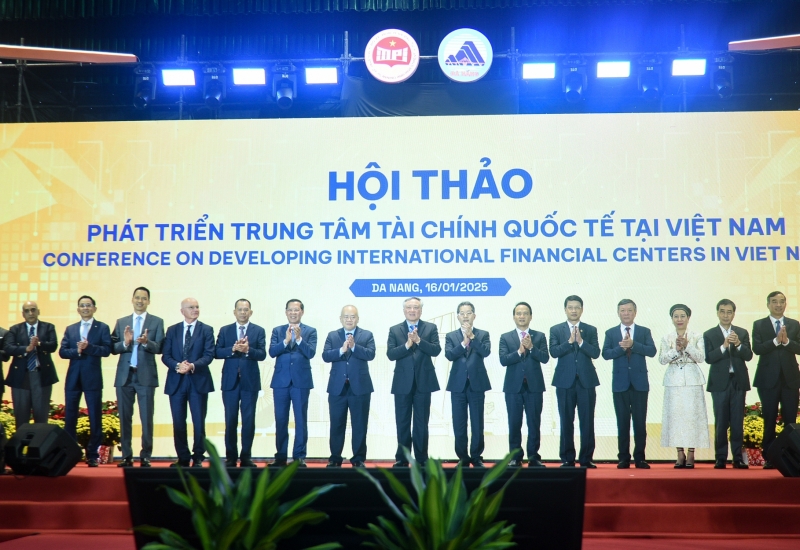
Viet Nam International Financial Center in Da Nang City: Aspirations, Models, and Adaptation Strategies for Vietnamese Banks
04/03/2026 537 Experts
This article analyzes the establishment of the Viet Nam International Financial Center (VIFC) in Da Nang City as a high-level financial ecosystem model. It clarifies the breakthrough legal foundations, Da Nang’s strategic advantages, and the adaptation requirements for the domestic banking system within the context of deep international financial integration.
1. Identifying the International Financial Center: A High-Level Financial Ecosystem
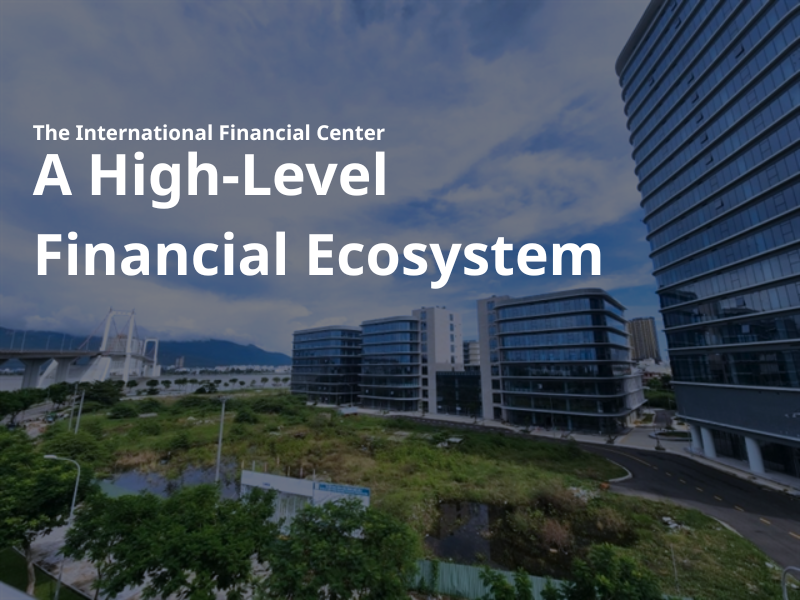
In general terms, an International Financial Center (IFC) is a location or geographical area with a high density of financial institutions such as banks, investment funds, and financial service companies—alongside international-scale stock, currency, and commodity exchanges. It serves as a vital hub connecting global capital flows, supported by modern infrastructure, a transparent legal environment, and effective management mechanisms. Simply put, an IFC is a diverse ecosystem of financial services concentrated in a specific area to connect and circulate international capital.
As a bright spot for economic growth, maintaining macroeconomic stability and converging the necessary conditions to develop a modern financial market, Viet Nam faces a historic opportunity to form IFCs, thereby connecting directly to global financial pulses. The decision by the Politburo, the National Assembly, and the Government to select Da Nang as one of two "strongholds" for an IFC stems not only from its strategic geopolitical position but also reflects the aspiration to reposition the city’s economic structure toward modernization, integration, and sustainable development.
2. Da Nang City: A Strategic Choice for a Specialized IFC Model
In Viet Nam, the Party and State early identified Da Nang as one of the important growth poles, with potential to develop high-quality services, including finance - banking.
Resolution No. 43-NQ/TW dated 24/01/2019 of the Politburo on the construction and development of Da Nang City to 2030, vision to 2045 oriented the development of Da Nang to become a major socio-economic center of the country, acting as the nucleus of the Central key economic region. On that basis, the Government continued to issue specific mechanisms and policies to create conditions for Da Nang to promote its advantages, including the orientation to research and develop a financial center associated with innovation and international integration.
Firstly, Da Nang City possesses specific advantages to build a "new generation" financial center. The city has an important geo-economic and political position with the role of being the center of the Central region, connecting the East-West Economic Corridor, along with a synchronous infrastructure system including seaports, international airports, modern urban infrastructure, and a living environment ranked high in the region. Besides, Da Nang also stands out with a strongly developing innovation ecosystem, associated with high-tech zones and software parks. These factors are assessed by the Central government as suitable to form a specialized financial center that is complementary and does not compete directly with Ho Chi Minh City. Different from the traditional financial development model in Ho Chi Minh City, Da Nang orients the construction of the financial center towards specialization, taking financial technology (Fintech), green finance, and trade finance as the development focus.
Secondly, Da Nang sets a strategic goal of breakthrough and sustainable development for the city. This is a major policy decision to create a new growth driver, shifting the economic structure from traditional tourism - services to fields with high knowledge content such as modern finance, financial technology, green finance, and asset management.
Thirdly, the local government leadership is particularly enthusiastic, showing political determination and very high commitment to the leaders of the Party and State in building the IFC in Da Nang. Not stopping at determination, Da Nang has prepared early and from afar prime clean land funds (coastal area of Vo Van Kiet - Vo Nguyen Giap streets with a total area of hundreds of hectares), training high-quality human resources, establishing an Advisory Council and Executive Agency for the IFC in Da Nang.
3. The Viet Nam IFC Model and Institutional Breakthrough from the Legal Framework
In the context of increasingly deep international economic integration, the formation of financial centers of regional and international stature is considered an important driver promoting economic growth, attracting investment capital flows, and developing high-quality financial services. In the world, the model of building and operating financial centers is very diverse. However, it can be summarized into three main modes:
(1) The IFC model formed naturally over a long historical period, developing through many stages and levels from low to high, gradually converging enough conditions to become an IFC, typical examples being London and New York;
(2) The IFC model formed through a process of reform and modernization with a methodical strategic orientation, developing according to a step-by-step roadmap and level, typical examples being Singapore, Shanghai, and Hong Kong (China);
(3) The new, independent, and specialized IFC model through building and applying policies with high openness and separate specific mechanisms such as Dubai, Abu Dhabi, Astana-Kazakhstan. A notable point in these three models is the geographical boundary. Models 1 and 2 do not have specific geographical boundaries.
Model 3 establishes clear and specific geographical boundaries. With model 3, the Government will design and build separate, superior, and specific policies and legal frameworks to encourage and attract investors to provide financial products/services and related non-financial services to operate the IFC within the established specific geographical framework and scope.
Through learning from international experience, Viet Nam has chosen the new, independent, and specialized IFC model. Accordingly, Resolution No. 222/2025/QH15 dated 27/6/2025 of the National Assembly on IFCs in Viet Nam established an important legal foundation, marking the first milestone for the construction and formation of IFCs in Viet Nam. Following that, by December 2025, the Government issued 08 important Decrees related to the establishment and operation of IFCs in Ho Chi Minh City and Da Nang City.
In this group of decrees, Decree No. 329/2025/ND-CP dated 18/12/2025 of the Government on licensing the establishment and operation of banks, foreign exchange management, and anti-money laundering in IFCs in Viet Nam is of great interest to investors. This Decree offers a more flexible licensing mechanism, many international standards and practices are allowed to be applied according to the policies of the parent bank or owner; an open foreign exchange management mechanism (such as allowing listing, quoting, pricing, and transactions in foreign currency; 100% foreign-owned members enjoy an especially open mechanism, no need to register loans, lending, and no need to register foreign exchange transactions when investing abroad) and the application of an anti-money laundering reporting regime according to international transaction standards, creating favorable conditions for capital flows to circulate quickly and effectively.
Banking activities in the IFC are not just an expansion in scale but a transformation in "quality" of the operating method, specifically such as:
(1) Liberation of strategic autonomy: Member banks are operated according to the policies of the owner or parent bank, allowing global financial institutions to apply intact business and risk management models that have been standardized worldwide, removing barriers of difference with domestic regulations;
(2) High-level financial product ecosystem: Going far beyond traditional credit operations, banks in the IFC provide a diverse portfolio of products according to international trends, from complex derivatives, investment banking operations, asset management to green finance. This is a place to test the latest Fintech products within a flexible legal framework;
(3) Transparency standard as a global "Passport": In the IFC, transparency is no longer a compliance requirement but a core competitive advantage. The application of anti-money laundering (AML) and know-your-customer (KYC) reporting regimes according to strict international standards not only helps control risks but also builds absolute trust for global investors when entering the market.
4. What Adaptation Strategy for Domestic Banks?
The establishment of the IFC has contributed to affirming the strong commitment of the Vietnamese Government in creating a stable, safe, transparent, and investor-friendly financial environment, while sending a clear message of readiness to cooperate and share development opportunities with the international community. By the end of 2025, the legal framework for Vietnam's IFC was basically completed, with Resolution No. 222/2025/QH15 and 08 guiding decrees acting as the foundation for the IFC to officially go into operation. Particularly in Da Nang City, as of December 2025, the IFC has attracted strong interest from the domestic and international financial community with more than 80 letters of interest to register as members, more than 20 memoranda of cooperation signed in many fields such as training, consulting, communication, investment promotion, financial product development, and 12 financial organizations and institutions officially becoming members. These results mark the beginning of a dynamic, diverse, and deep financial ecosystem, acting as a clear testament to the correctness of the major policies of the Party and State.
The participation of large financial institutions at Vietnam's IFC poses new requirements for domestic banks in choosing an appropriate development strategy, between competition and cooperation. From an analytical perspective, this should be seen as an opportunity for Vietnamese banks to gradually adapt, improve management capacity, professional level, and international integration capability. Specifically:
One is, research and consider establishing a presence in the IFC. A number of domestic banks with sufficient financial potential and management foundations approaching international levels should consider establishing subsidiary banks in the IFC to directly benefit from breakthrough mechanisms and access low-cost international capital sources.
Two is, build a synergistic and symbiotic relationship, a win-win cooperation model:
(1) Foreign banks at the IFC possess abundant capital flows, high credit ratings, and diverse product systems, but lack deep understanding of customer characteristics and distribution networks in the Vietnamese market. Conversely, domestic banks hold advantages in customer data, branch networks, and familiarity with domestic legal regulations. Cooperation will create a closed process: Foreign banks play the role of "supply source," domestic banks play the role of "extended arm" to bring this capital flow into real economic projects.
(2) Implement entrustment mechanisms and green finance. According to Decree No. 329/2025/ND-CP, cooperation in exploiting green capital sources is a huge space. International banks have the obligation and need to disburse green credit packages from international funding funds but often face difficulties in finding qualified local projects. Domestic banks, through the role of asset management agents or cooperation partners, will be an important bridge to appraise, monitor, and disburse this capital source into renewable energy and sustainable infrastructure projects in the country.
(3) Spillover effect of management standards. The presence of international banks at the IFC creates a positive "standardization pressure." To become strategic partners or participate in syndicated transactions with institutions at the IFC, domestic banks are forced to upgrade risk management standards, transparency of information, and apply AML/KYC standards according to the highest international practices. This is a synergy in terms of level, helping to narrow the capacity gap between Vietnamese and international banks.
Three is, take advantage of the "leverage" of Decree No. 329/2025/ND-CP. Domestic banks need to carefully study the regulations in this Decree to calculate joint venture options or strategic links. Utilizing the open foreign exchange management mechanism and the ability to liberalize foreign loans through the IFC will help domestic banks optimize their balance sheets and diversify their revenue structure from service fees instead of just depending on traditional credit.
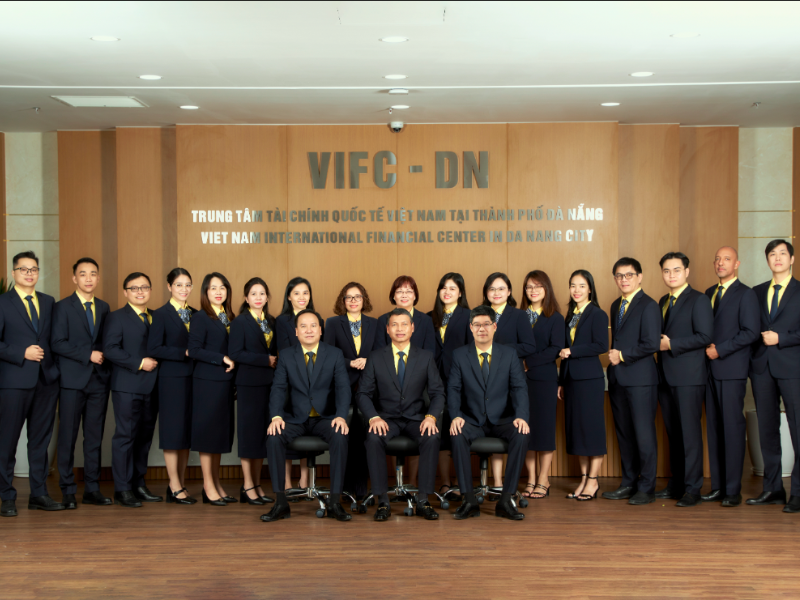
In summary, building an IFC in Da Nang City is a journey full of challenges to elevate Vietnam's financial status in the region and the world. For domestic banks, if they know how to effectively utilize the synergy of capital, technology, products, services, and management standards from international financial institutions, competitive pressure will become the driver to promote innovation, improve capacity, and affirm their position in the global financial service supply chain. With the high determination of the Party and State and the consensus and drastic involvement of the Da Nang City government, it is expected to open a future where global financial flows converge, creating a new driver for the fast, sustainable, and prosperous development of the country. With the role and task of ensuring monetary - banking stability and creating a safe and transparent financial environment, the banking system will continue to accompany, contribute actively, effectively, and responsibly to the process of developing the IFC in Da Nang City, thereby contributing to enhancing Vietnam's position on the regional and international financial map./.